LANDMARK · SEONGEUP · PYOSEON
Seongeup Folk Village to Pyoseon Beach: A Living Old Town and Jeju's Widest Sands
Seongeup highlights · Free tours and workshops · Pyoseon tides · Jeju Folk Village
Published 4 min read
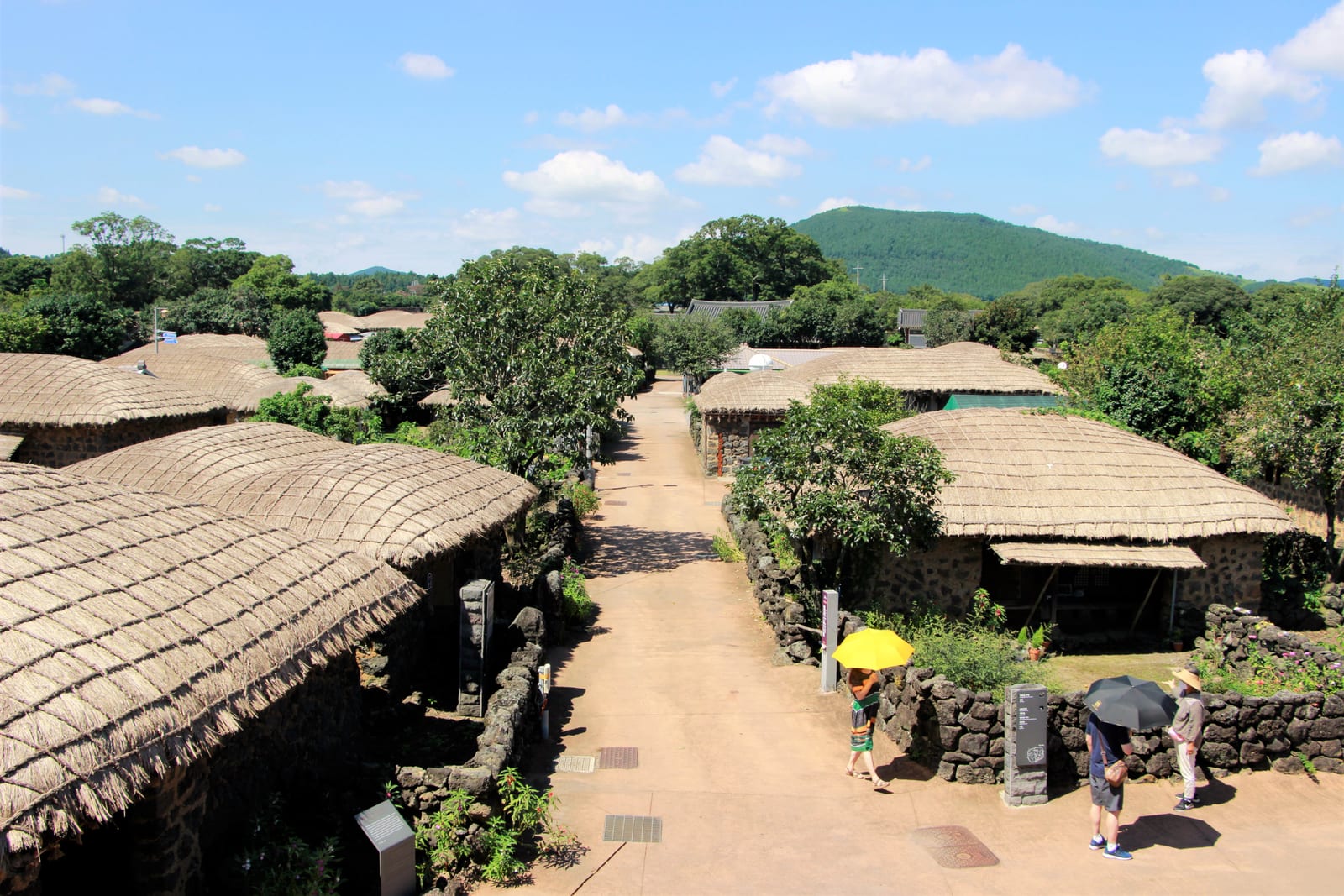
Seongeup was the walled seat of Jeongui County from 1423 until the end of the Joseon dynasty. People still live here, so there is no admission charge, and some 300 thatched houses, black stone walls and a thousand-year-old zelkova survive as a working village, designated a National Folklore Heritage site in 1984. It lies about 15 minutes inland from Onpyeong by car, and another 10 minutes brings you to Pyoseon, the widest beach on the island, which makes an easy half day.
Seongeup Folk Village: what to see
- The zelkova and hackberry grove — The zelkova at the heart of the village is thought to be about 1,000 years old, and the hackberries around it roughly 600. Protected as a Natural Monument since 1964, it is the village's centre.
- Ilgwanheon and the Confucian school — The magistrate's office, Ilgwanheon, and the hyanggyo where scholars were taught both stand inside the walls. The walls run about 770 metres, best restored at the south gate; climb it for the view of thatched roofs in the hero photo.
- Twelve dol hareubang — Of the 45 original stone grandfather statues on Jeju, 12 stand in Seongeup. The pair outside the south gate are the most photogenic.
- Thatched houses — Five houses, including the Gaekjujip inn and the blacksmith's house, are heritage-listed. They are lived in, so ask before entering a courtyard.
Free tours and workshops
Cultural tourism guides lead free tours of the village every day: 10:00 to 16:30 from March to October and 09:00 to 15:30 from November to February, with a lunch break from 12 to 1 (as of October 2026). Tours last about an hour; sign up at the information office or book ahead. With a guide you notice the things you would walk past alone, such as the holes in the walls, the jeongnang gate poles and the old pig-toilet outhouses. The heritage training centre runs workshops from March to October on Jeju folk songs (Thursdays), omegi rice liquor (Mondays) and gosori distilled liquor (Saturdays). Near the entrance are many shops selling local products, and some press you to buy after a tasting; feel free to decline. Pets are welcome, and since the village has no lighting to speak of, come before dusk.
Pyoseon Beach: a different beach at each tide
Pyoseon Haevichi Beach is more than 300 metres wide, the broadest and gentlest on Jeju. At low tide a vast flat of firm, fine sand appears; at high tide it turns into a round lagoon about a metre deep. That makes it one of the best places in east Jeju for small children. Jeju's designated beaches opened from 24 June to 6 September in 2026, with lifeguards from 10 am to 7 pm. A large car park faces the beach, with toilets, changing rooms, showers and a campsite. It is also the end of Olle Route 3 and the start of Route 4, the closing scene of our Olle Route 3 guide.
Jeju Folk Village: how it differs from Seongeup
A hundred metres from the beach, Jeju Folk Village is a paid open-air museum recreating a 19th-century Jeju settlement, with mountain, mid-slope and fishing villages and a government office laid out in zones, plus folk performances and hands-on activities. If Seongeup is a village that is lived in, this is a village built to be shown. Admission is 15,000 won for adults, 12,000 for teens and 11,000 for children. From March to October it opens at 9 am, sells its last tickets at 6 pm and closes at 7; from November to February last tickets are at 5 pm (as of October 2026). It is open every day, small dogs under 7 kg are allowed, and a separately ticketed light show runs after dark.
Getting there and what to eat
Onpyeong to Seongeup is about 12 km, roughly 15 minutes by car, and Seongeup to Pyoseon Beach about 9 km, 10 minutes. Seeing the village in the morning and spending lunch and the afternoon at Pyoseon works best. By bus, the 201 runs direct from Onpyeong to Pyoseon; for Seongeup, change to the 222 at the Pyoseon transfer stop. Restaurants in and around Seongeup serve grilled black pork and duruchigi stir-fry, pheasant buckwheat noodles, bracken bibimbap and grilled tilefish, and omegi rice cakes and the local omegi and gosori liquors come from here too. Opening hours vary, so check before you go. With time to spare on the way back, the Honinji legend walk is close to the house.
Places in this guide
Map of places
Numbers match the map pins. Open any place in Kakao Map, Naver Map or Google Maps.
Map data © OpenStreetMap contributors
Sight
Seongeup Folk Village
Free entry · free guided tours · 1,000-year-old zelkova
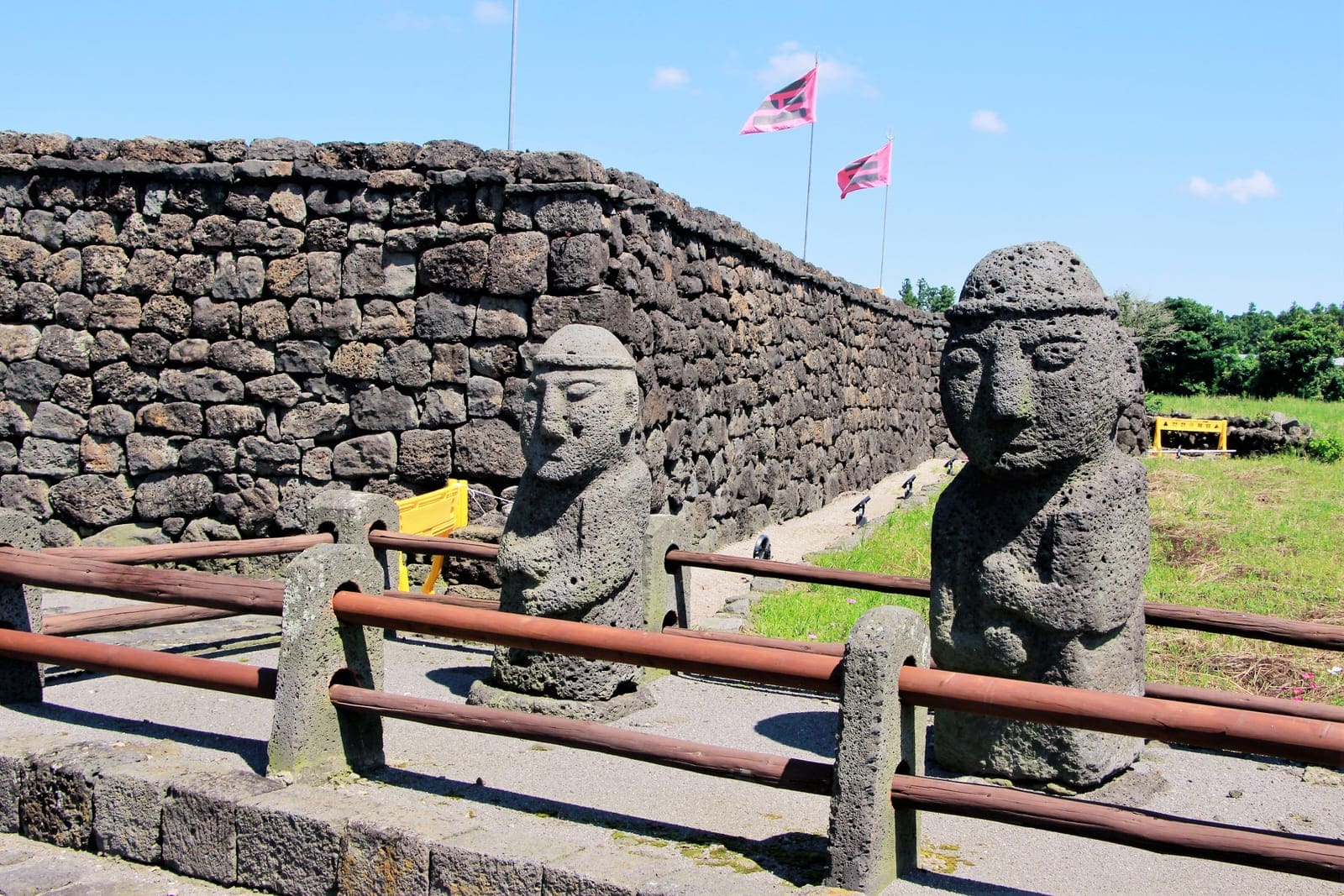
Photo: Trainholic · CC BY-SA 4.0 · Wikimedia Commons Sight
Jeju Folk Village
Paid open-air museum · next to Pyoseon Beach
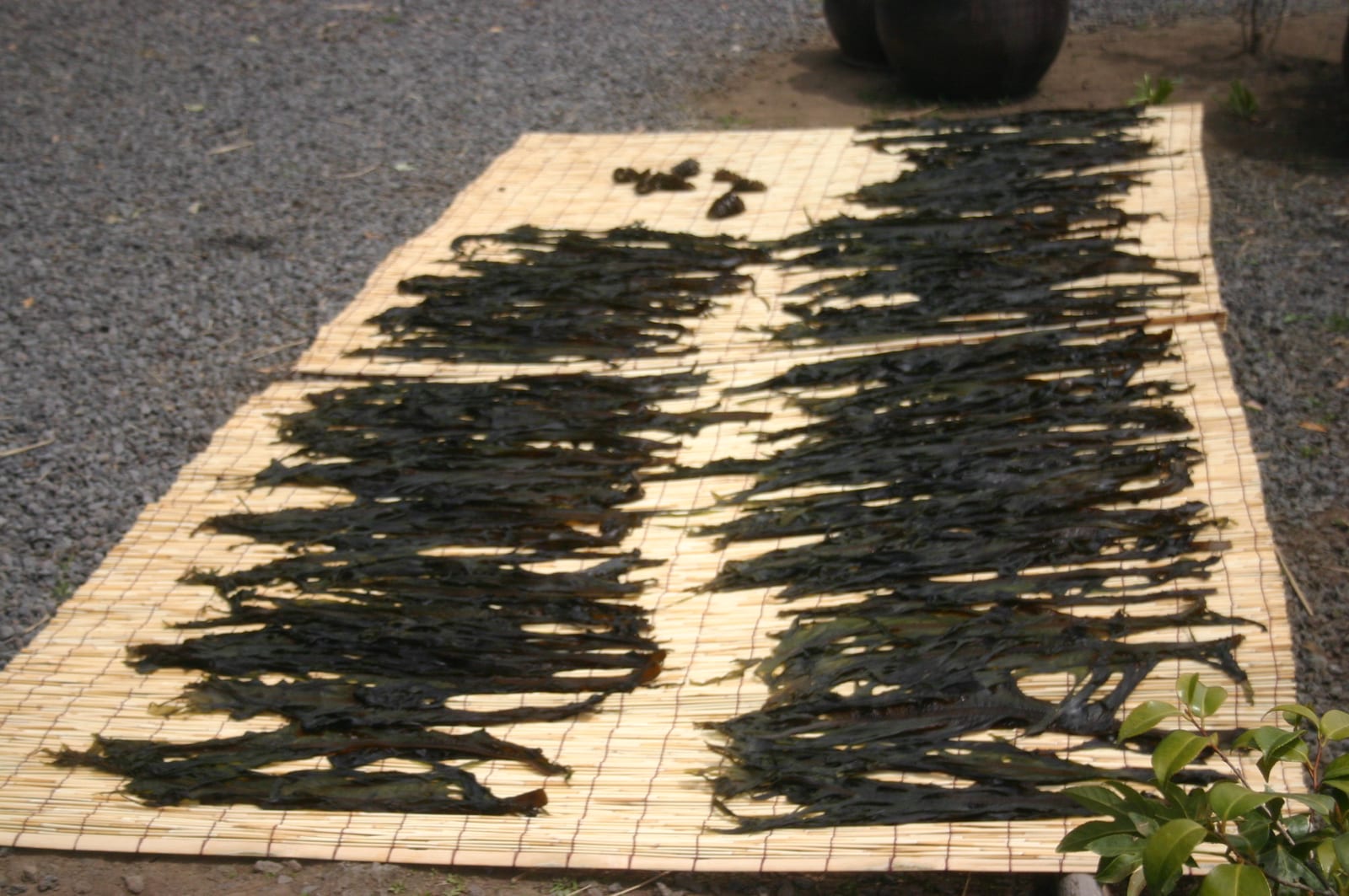
Photo: karendotcom127 · CC BY 2.0 · Wikimedia Commons Sight
Pyoseon Haevichi Beach
Huge sand flat at low tide · end of Olle Route 3
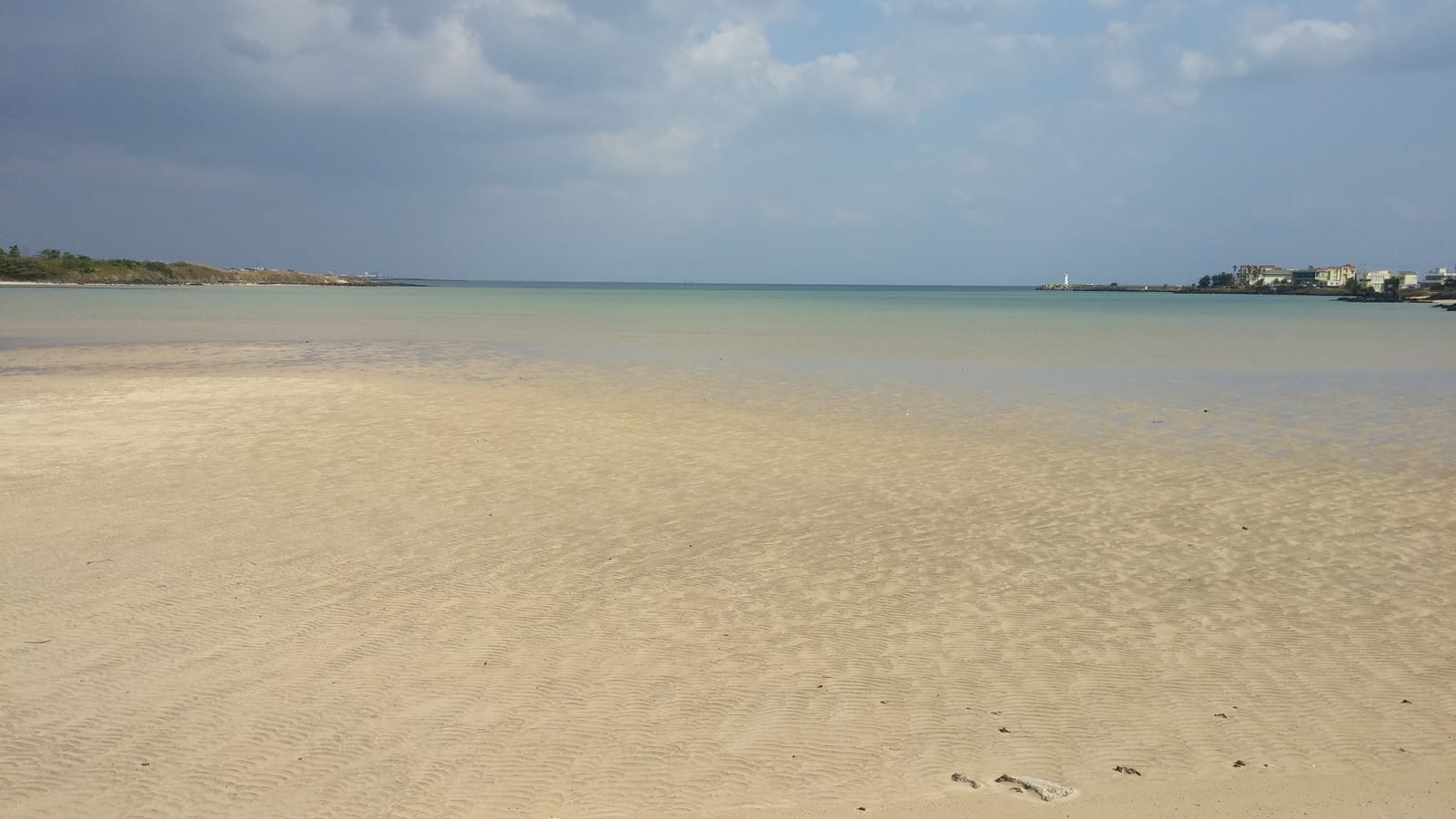
Photo: Jocelyndurrey · CC BY-SA 4.0 · Wikimedia Commons Stay
Jeju Daily
Private house, one group a day · about 5 min by car from Ilchulbong

Questions
Questions
Q. How is Seongeup Folk Village different from Jeju Folk Village? +
Q. Is it true the shops in the village push hard? +
Q. When is Pyoseon Beach best with children? +
Read next
Read next
15 MINUTES TO SEONGEUP AND PYOSEON · ONPYEONG
Jeju Daily
A single-story private house in Onpyeong, Seongsan. Walk Seongeup in the morning, play on Pyoseon Beach in the afternoon and be back for dinner. Three bedrooms, two baths, wide lawn and BBQ deck. Up to 12 guests, with the same rate from 1 to 6.