ITINERARY · EAST JEJU, FOUR SEASONS
East Jeju by Season: When to Come and What You Will See
Spring rapeseed and blossom · Summer hydrangeas and sea · Autumn silver grass and tangerines · Winter birds and sunrise · Monthly weather
Published 5 min read
East Jeju changes its highlights with the season. In spring the fields around Seongsan turn yellow, in summer Honinji pond and the Jongdal-ri shore fill with hydrangeas, in autumn the volcanic hills of Gujwa wave with silver grass, and in winter the Hado-ri wetland fills with migratory birds. This guide covers Seongsan-eup, Gujwa-eup and Pyoseon-myeon, season by season, with the monthly weather for Seongsan on one page. Dates are as of October 2026; flowers and festivals shift by a week or two each year, so check before you set out.
Spring (March to May): rapeseed, cherry blossom, bracken
- Rapeseed — Peaks from late March to early April. There are rapeseed fields below Seongsan Ilchulbong and in front of Gwangchigi Beach (some are private and charge a small entry fee), and from the hill at Seopjikoji you see Ilchulbong across the yellow. Noksan-ro in Gasi-ri, Pyoseon, is a 10 km drive lined with cherry trees and rapeseed, and the 2026 Seogwipo Rapeseed Festival was held there on 4 and 5 April.
- Cherry blossom — The cherry tunnel at Sinpung-ri in Seongsan-eup runs 3 to 4 km; its third festival was held on 28 and 29 March 2026. The cherry trees around Honinji pond are lovely beside the water.
- Bracken — April is when gosari, the bracken fern, is at its most tender. The frequent drizzle at this time is called the "bracken monsoon". Nearly 40 percent of Jeju's lost-hiker cases involve bracken pickers, so do not wander deep into the fields.
- Weather — The average temperature climbs quickly from 9.5°C in March to 17.7°C in May, and May has the most sunshine hours of the year.
Summer (June to August): hydrangeas, lilies, the sea
- Hydrangeas — Honinji pond peaks in mid-June (reported in full bloom on 13 June 2026). The hydrangea road along the Jongdal-ri coast peaks from mid to late June, with Ilchulbong and Udo beyond the flowers, and can run into July.
- Yellow hibiscus and crinum lilies — Around Siksanbong in Ojo-ri the yellow hibiscus flowers from June to August, and on Tokkiseom off Hado-ri the white crinum lilies bloom from late July to September, opening fully at night with a strong scent.
- Beaches — Jeju's designated beaches opened from 24 June to 6 September 2026, 10 am to 7 pm. In the east, Gimnyeong, Woljeong, Sinyang Seopji and Pyoseon are designated; Sehwa and Hado are not, so they may have no lifeguard.
- Monsoon and typhoons — The monsoon runs on average from 19 June to 20 July, and August is the wettest month at 343 mm. Typhoons concentrate in August and September. The average August high is 29.7°C with humidity above 80 percent, so start early in the day.
Autumn (September to November): silver grass, tangerines, walking weather
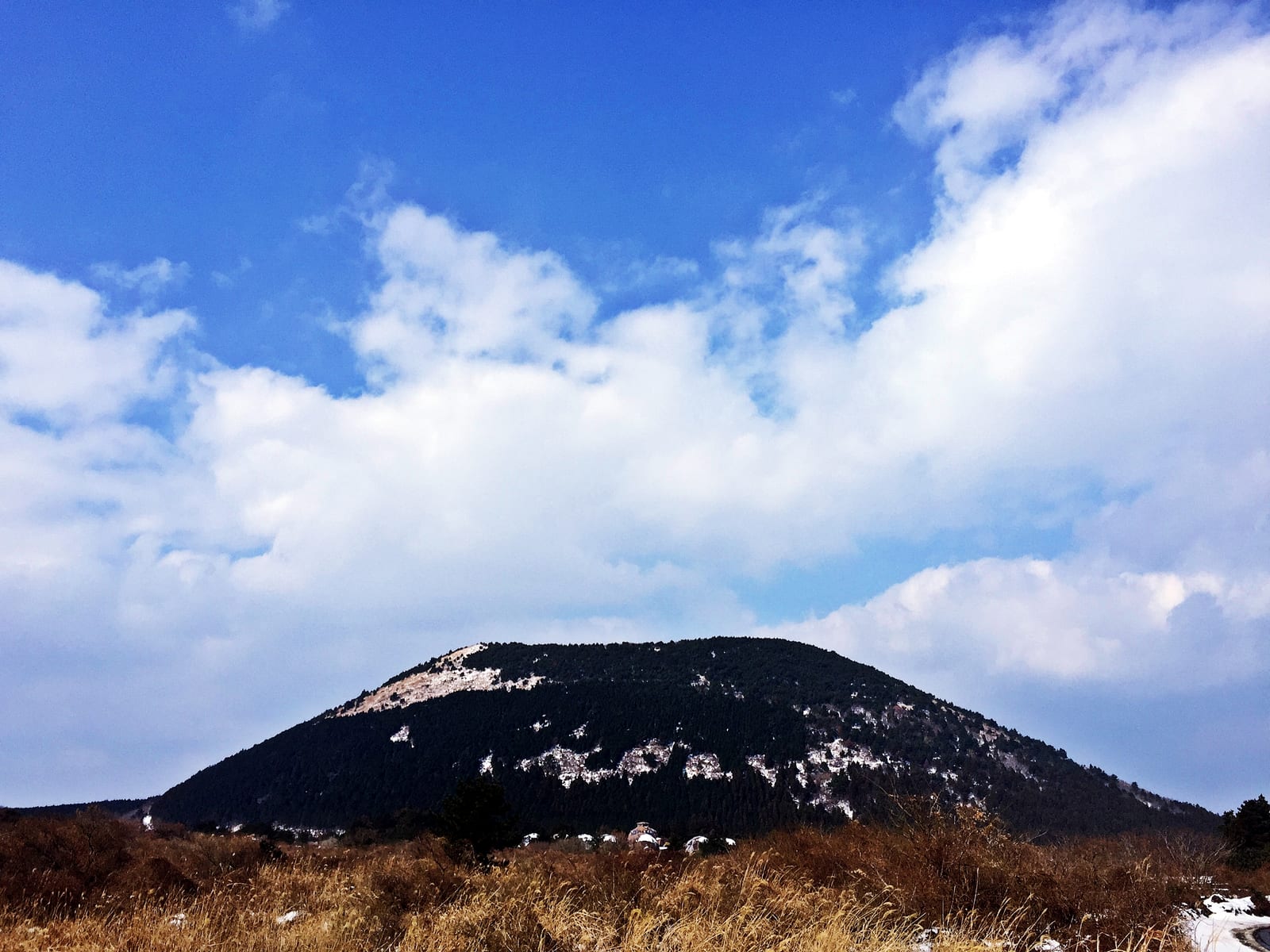
- Silver grass — In October and November Akkeun Darangswi Oreum is covered in silver grass, with Hallasan visible beyond it from the top. It pairs with Darangswi Oreum, and Yongnuni Oreum, closed for recovery until July 2023, can be climbed again (there is no car park). All three are in our three oreum walks.
- Tangerine picking — From mid-October to late December, farms in Seongsan-eup open for tangerine picking. Fees and hours vary by farm, so check before booking.
- Olle walking — October has the fewest rainy days, six, and an average of 18°C, which makes it the best month for the Olle trails. The 2026 Jeju Olle Walking Festival runs from 5 to 7 November on Routes 19 and 20 (Jocheon to Gimnyeong). Routes 1, 2 and 3 outside our door can be walked any time.
- Autumn colour — There is little foliage on the east coast; the Saryeoni forest path turns in early to mid-November.
Winter (December to February): birds, winter radish, New Year sunrise
- Migratory birds — From late October to mid-March some 30 species and 3,000 to 5,000 birds winter at the Hado-ri sanctuary. Spoonbills, black-faced spoonbills and swans can be watched from a hide with telescopes. Access is closed during avian flu outbreaks.
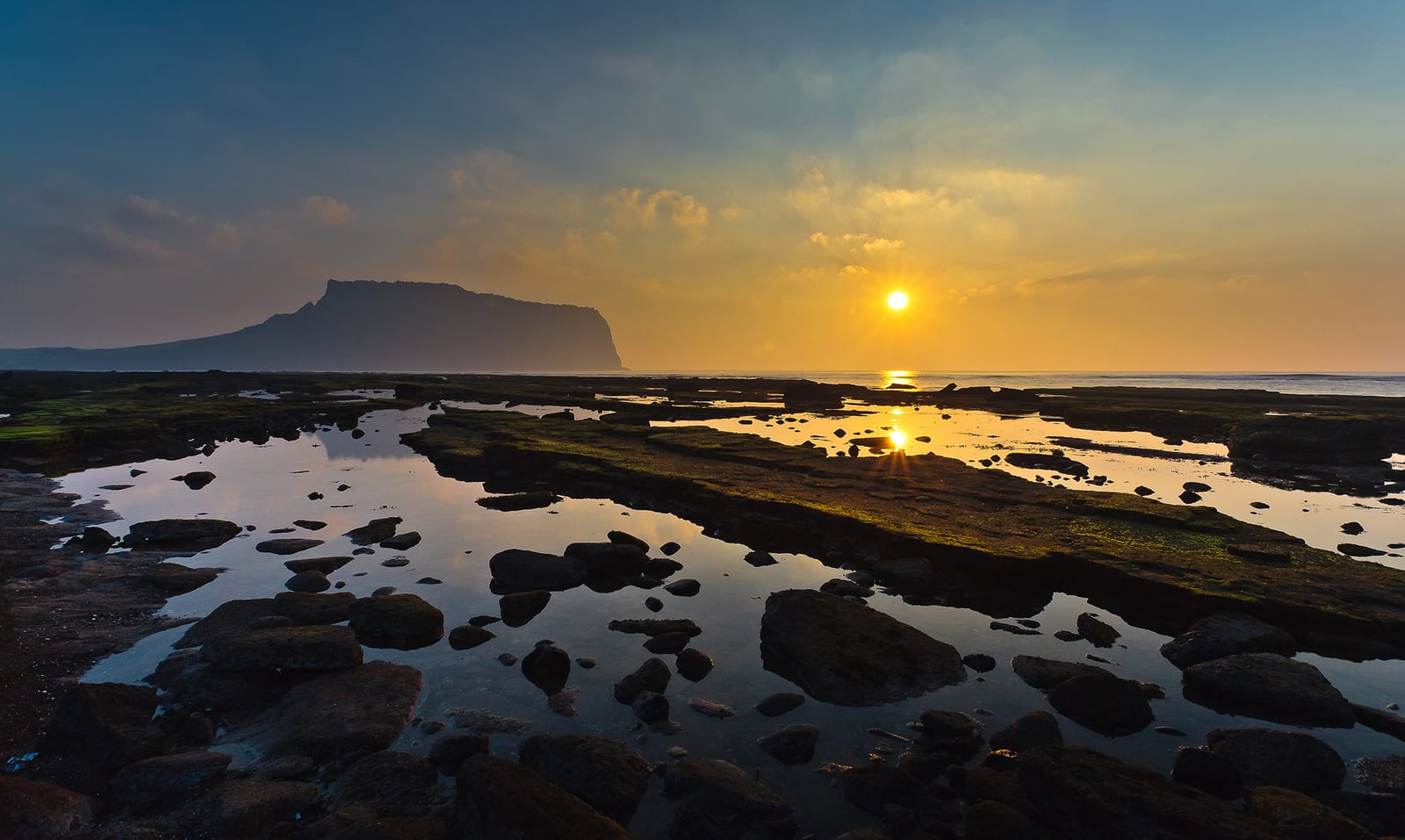
- Seongsan Sunrise Festival — Seongsan's New Year event: a countdown and fireworks on the night of 31 December, then a registered dawn climb of Ilchulbong on 1 January. In late December the sun rises at Seongsan at around 7:35, and from Gwangchigi Beach it comes up beside Ilchulbong, as in the photo above. In winter the sun rises between Udo and Ilchulbong when seen from Jimibong.
- Winter radish and camellias — Seongsan-eup grows 45 percent of Jeju's winter radish, so from mid-November to early April the fields are full of it. The private garden "Samdalri Kkotbateseo" in Samdal-ri has sasanqua camellias from late November to January.
- Weather — January averages 5.4°C with an average low of 2.1°C. Snow is rare, but the sea wind makes it feel colder, and January has the least sunshine of the year.
Monthly weather and what to pack
These are the Korea Meteorological Administration's 1991 to 2020 averages for the Seongsan station. Average temperatures are 5.4°C in January, 13.8°C in April, 25.1°C in July and 18.2°C in October. Monthly rainfall is lowest in October at 114 mm and highest in August at 343 mm, and the annual total of 2,030 mm is about one and a half times that of Seoul. Pack a windbreaker in spring and autumn, a rain jacket and hat in summer and a windproof coat in winter, plus sunscreen and trainers in every season. For wet days see East Jeju on a rainy day, and for seasonal activities with children, East Jeju with kids.
Places in this guide
Map of places
Numbers match the map pins. Open any place in Kakao Map, Naver Map or Google Maps.
Map data © OpenStreetMap contributors
Sight
Gwangchigi Beach
Best reflection view of Ilchulbong · changes with the tide
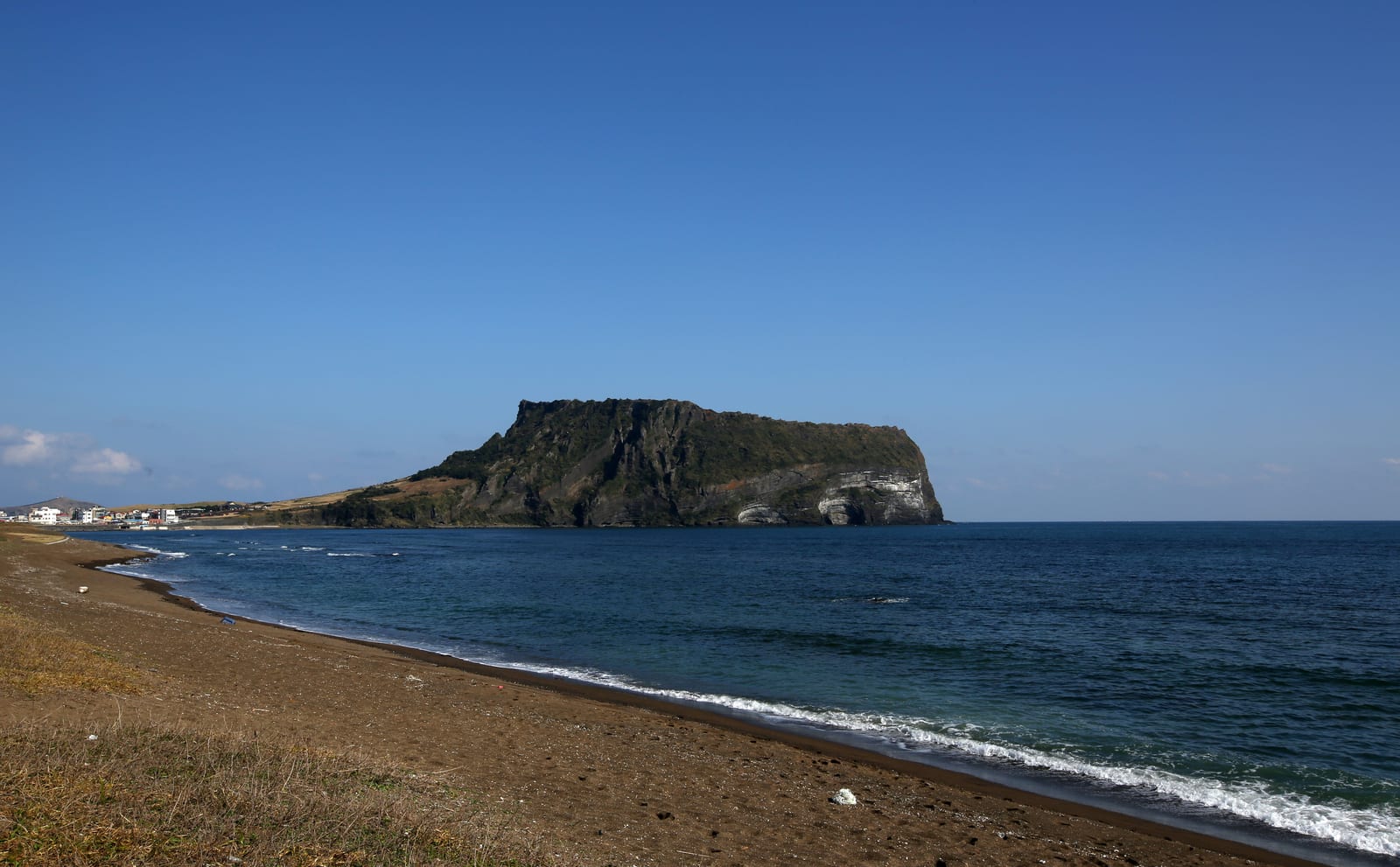
Photo: Korea.net (Republic of Korea) · CC BY-SA 2.0 · Wikimedia Commons Walk
Seopjikoji
The cape from the dramas · canola in spring · windy
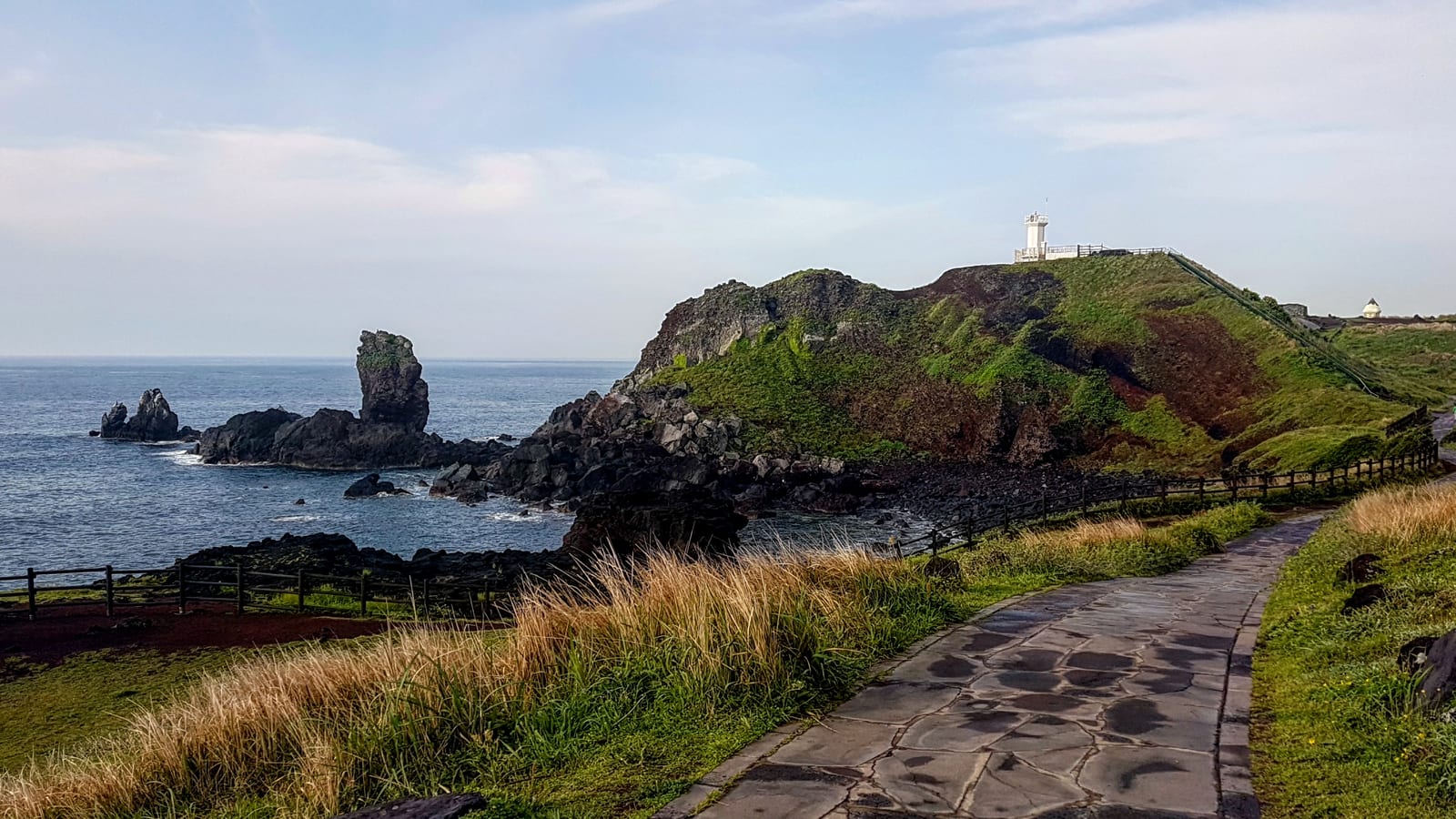
Photo: Engin Cukuroglu · CC BY-SA 4.0 · Wikimedia Commons Sight
Honinji Pond
Founding-legend wedding pond · Provincial Monument No. 17 · free entry
Sight
Jongdal-ri village
Hydrangeas in June · salt-field exhibit · small bookshops
Sight
Tokkiseom (Rabbit Island)
Crinum lily colony, Natural Monument · blooms late Jul–Sep · view from shore
Walk
Akkeun Darangswi
10-minute climb · autumn silver grass
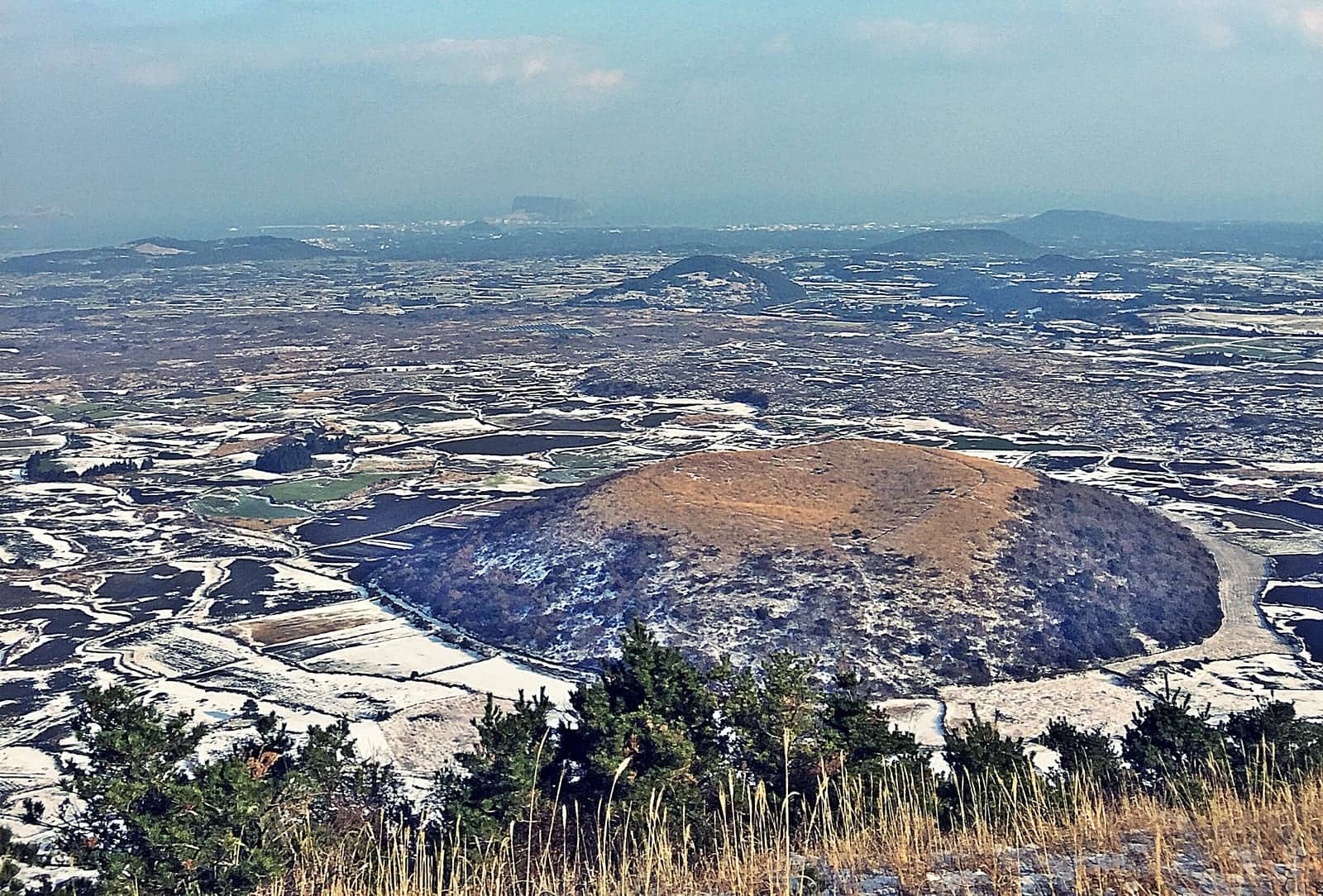
Photo: Commekiss · CC BY-SA 4.0 · Wikimedia Commons Walk
Yongnuni Oreum
20 min to the top · some sections fenced
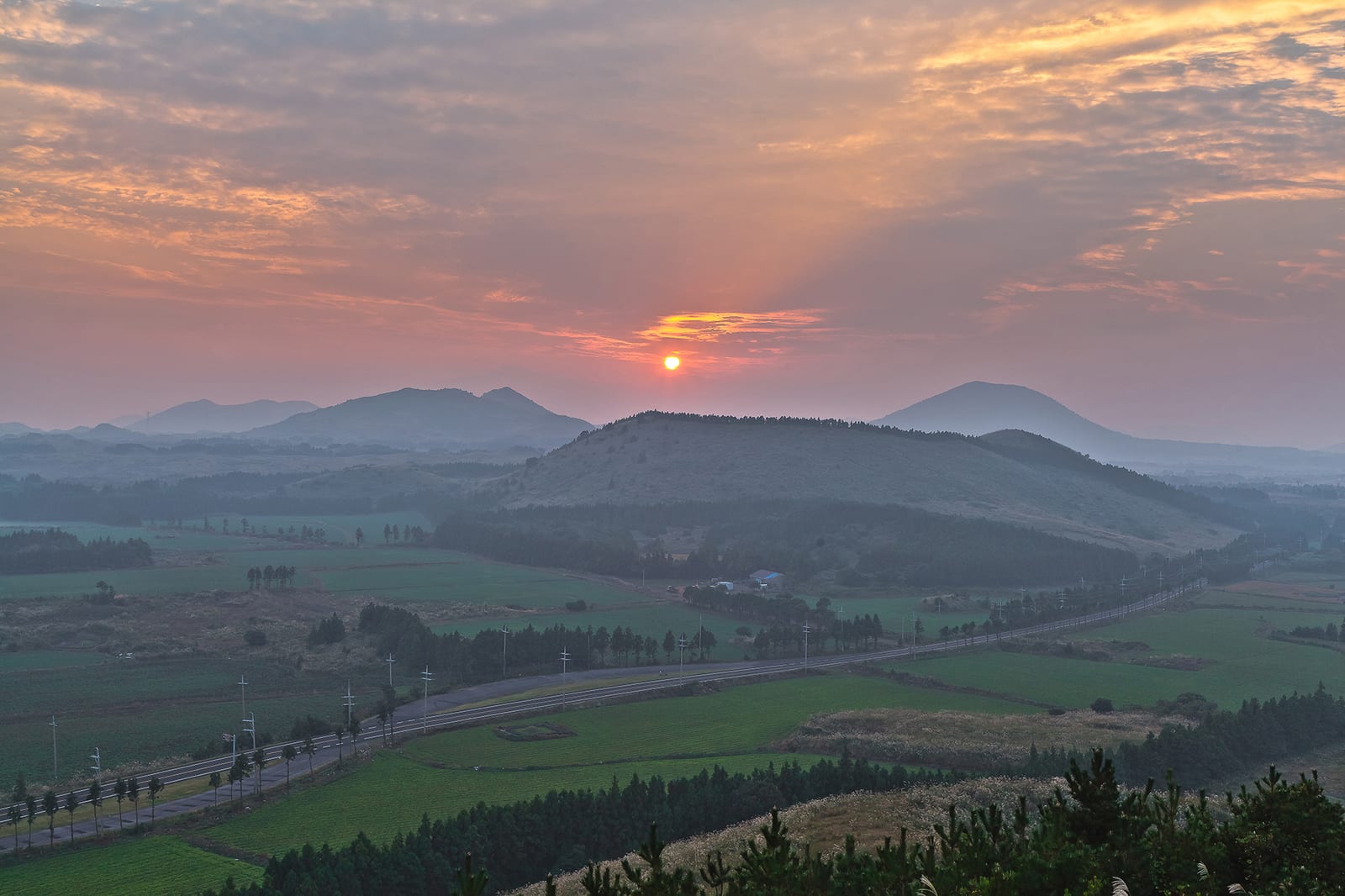
Photo: HiHoHo · CC BY-SA 3.0 · Wikimedia Commons Sight
Hado-ri Migratory Bird Sanctuary
3,000–5,000 wintering birds late Oct–Mar · hide
Sight
Seongsan Ilchulbong
UNESCO site · 20–30 min to the top
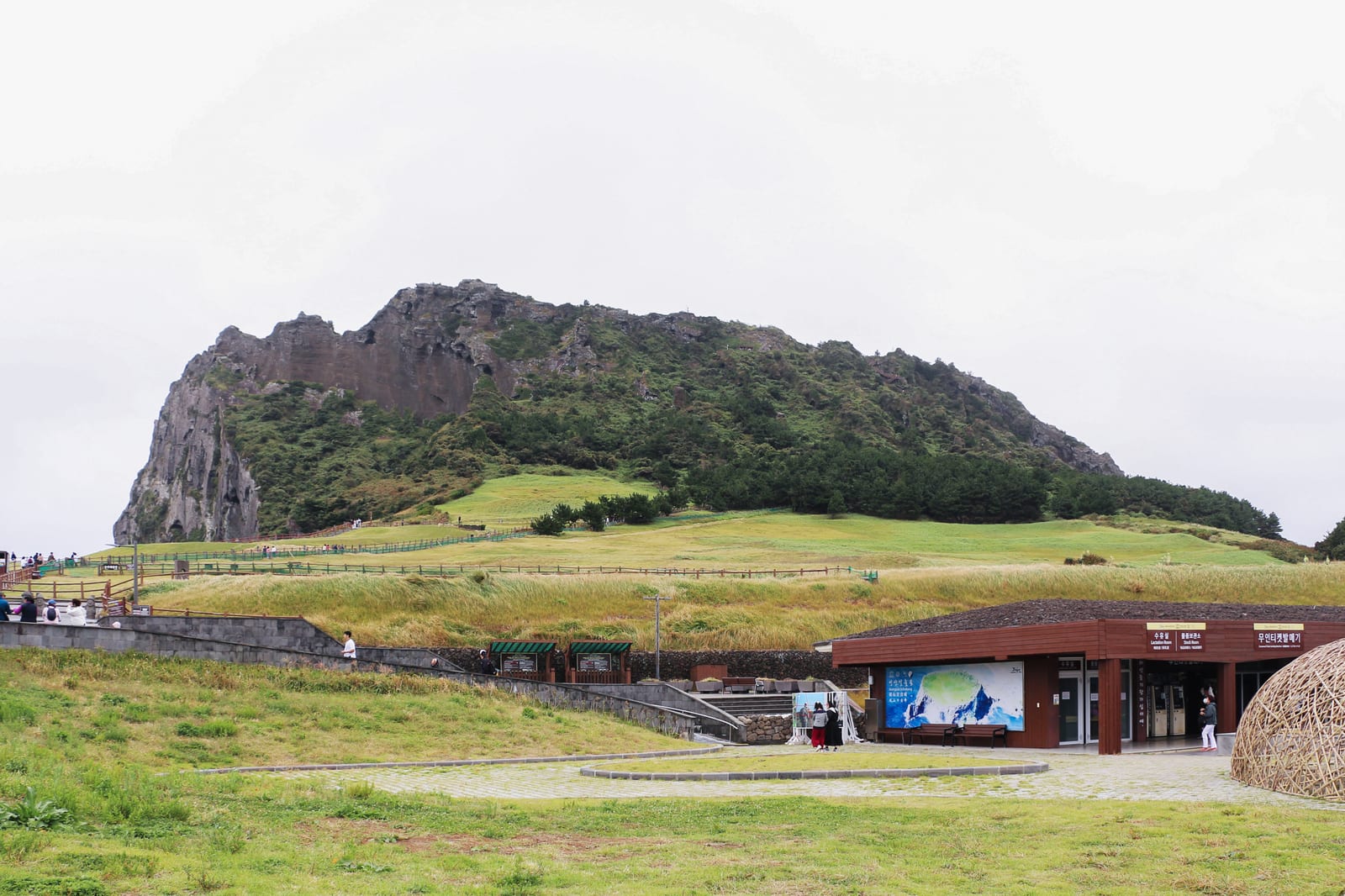
Photo: Bernard Gagnon · CC0 · Wikimedia Commons Stay
Jeju Daily
Private house, one group a day · about 5 min by car from Ilchulbong

Questions
Questions
Q. When is the best time to visit east Jeju? +
Q. When should I avoid the monsoon and typhoons? +
Q. Can anyone join the New Year climb at the Seongsan Sunrise Festival? +
Read next
Read next
A BASE FOR ALL FOUR SEASONS · ONPYEONG, SEONGSAN
Jeju Daily
A single-story private house in Onpyeong, Seongsan. The rapeseed fields at Gwangchigi in spring, the hydrangeas at Honinji and the beaches in summer, the silver grass on the oreum in autumn and the Seongsan sunrise in winter are all within 20 minutes by car. Three bedrooms, two baths, a wide lawn and BBQ deck. Up to 12 guests, with the same rate from 1 to 6.